
You "bird brain!"
Perhaps we’ve been insulting the wrong species all along.

The other afternoon I made the mistake of offering unsolicited driving advice to a friend. This is one of those activities that ranks just below discussing politics at family weddings and correcting someone’s pronunciation on social media. It never ends well. He had just attempted to reverse his SUV into a parking space that appeared suitable only for a bicycle and perhaps an optimistic labrador. Three pedestrians had stopped to watch. A security guard folded his arms with the quiet resignation of a man who knew he wasn’t going home anytime soon. My friend, however, remained unfazed. “Relax,” he announced through the open window. “I’ve got this.” Barely 3 seconds later, the rear bumper and a concrete pillar introduced themselves to each other with unnecessary enthusiasm.
Without thinking, I shook my head and muttered, “Bird brain.” He glared at me. I apologised immediately. Not to him. To the birds.
Because if one spends even a few minutes thinking about it, “bird brain” is an extraordinarily unfair insult. We have been using it for generations to describe absent-mindedness, foolishness and spectacular lapses in judgement. Yet the more I read about birds over the years, the more convinced I become that they deserve a formal apology from humanity. We have spent centuries ridiculing creatures that routinely outperform us in ways we barely notice. The phrase itself has rather predictable origins. For a long time people assumed that intelligence could be measured simply by the size of the brain. Birds had tiny heads. Therefore, they must possess tiny minds. It seemed perfectly logical. Humans have always enjoyed simple explanations, especially when those explanations conveniently place us at the top of every hierarchy.
Unfortunately for us, science had other ideas.
Over the past few decades neuroscientists have discovered that many birds pack astonishing numbers of neurons into their comparatively small brains. Their brains are organised differently from ours, but “different” has quietly turned out not to mean “inferior.” It merely means evolution solved similar problems using another design. Nature, unlike us, doesn’t seem particularly interested in awarding first prizes.
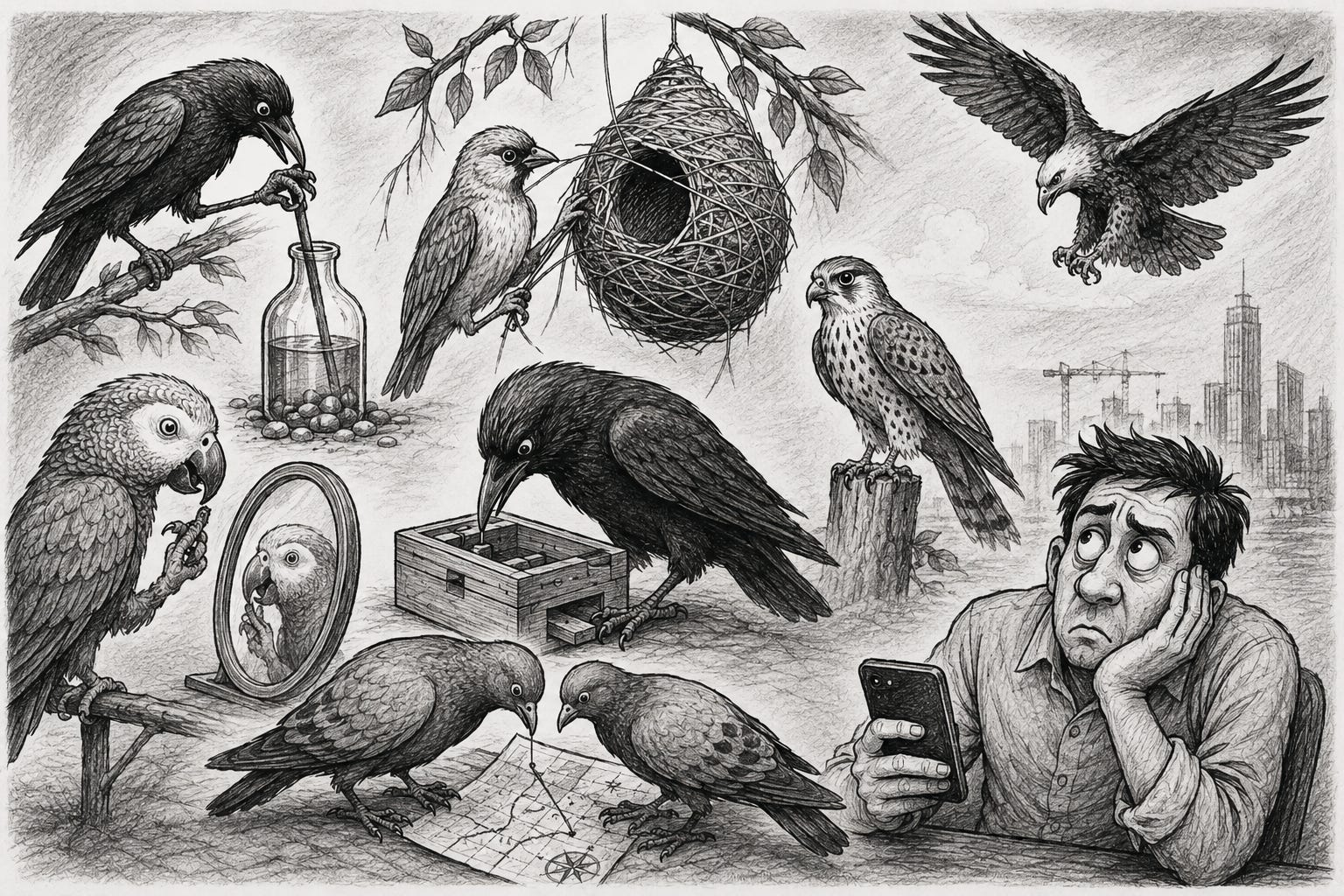
Take crows, for example. For most Indians, crows are either noisy neighbours, unofficial garbage inspectors or highly skilled thieves specialising in unattended snacks. Every locality seems to have one crow that believes your breakfast belongs to the community. Mine certainly does. I have watched one fly away triumphantly with an entire slice of buttered toast while maintaining eye contact with me throughout the theft. It wasn’t stealing food. It was establishing dominance. Scientists, meanwhile, have been discovering that crows manufacture tools, solve multi-step puzzles, recognise individual human faces and remember them for years. Researchers at the University of Washington even found that crows warn one another about humans they consider dangerous. Imagine annoying one crow today and being recognised by his grandchildren 5 years later. Most of us struggle to remember where we kept the television remote. Crows apparently maintain intelligence dossiers.
Then there are ravens, those larger, darker cousins that have spent centuries starring in mythology, folklore and Edgar Allan Poe’s literary nightmares. Ravens don’t merely solve problems. They plan ahead. They cooperate. They deceive one another when circumstances demand it. Young ravens have even been observed hiding food while pretending to hide it somewhere else because they suspect another raven is watching. Office politics, it would appear, existed long before corporate offices.
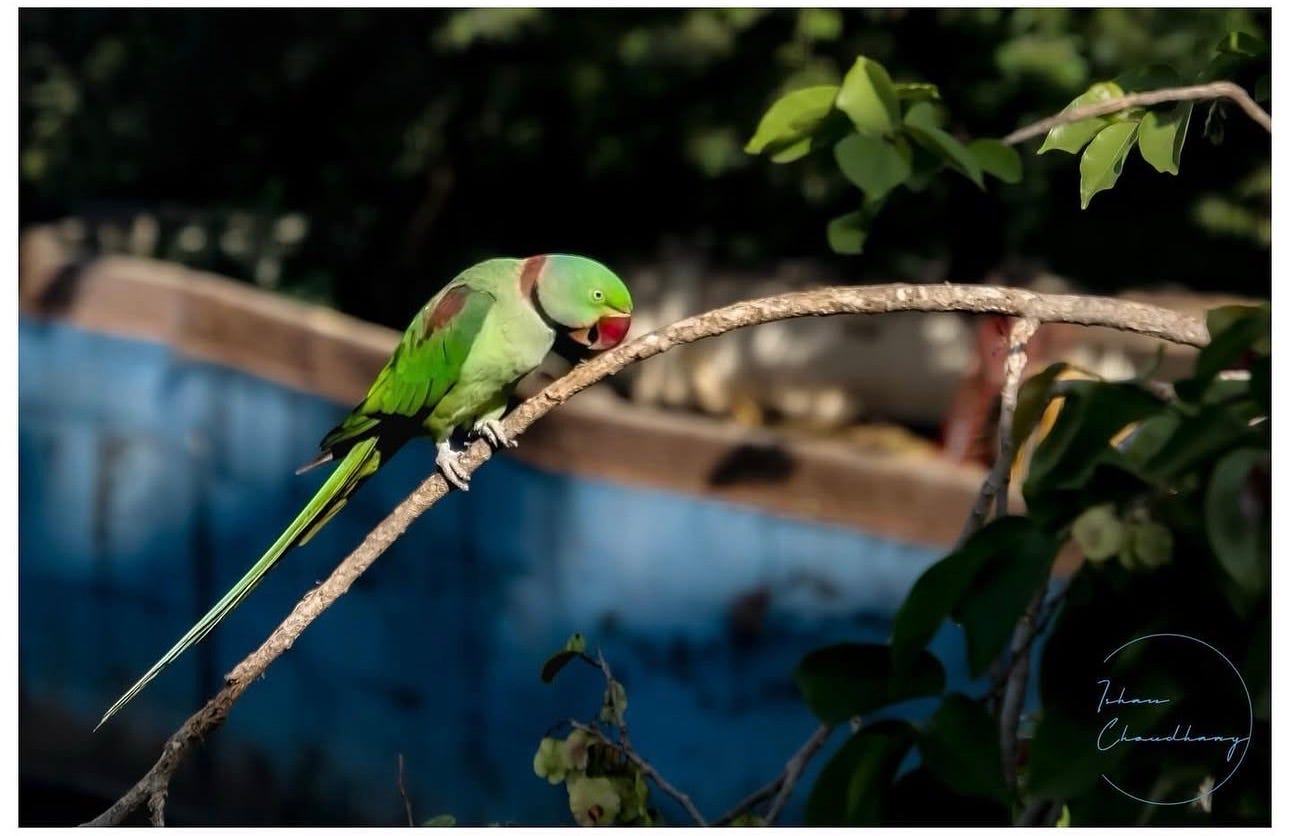
Parrots have suffered an equally unfortunate public relations problem. We dismiss them because they imitate people, as though mimicry were some trivial party trick. It isn’t. Try perfectly reproducing your spouse’s voice, your mother’s laugh, your office ringtone and your neighbour’s pressure cooker whistle without making a mistake. Most of us can’t convincingly imitate our own signatures. Certain African Grey parrots have demonstrated the ability to understand colours, shapes, numbers and relationships between objects. One famous parrot named Alex developed a vocabulary of over 100 words and could identify quantities, distinguish materials and answer surprisingly complex questions. He died in 2007, but he left behind an uncomfortable question for the rest of us. If a bird can understand abstract concepts, what exactly qualifies as a bird brain?
The weaver bird deserves an honorary degree in architecture. Every monsoon I find myself staring at those elegant hanging nests that resemble handcrafted lanterns swaying gently from tree branches. They are not random bundles of grass. They are engineering projects. The males weave intricate structures using strips of leaves and grass, carefully selecting materials flexible enough to bend but strong enough to survive wind and rain. The entrance is usually positioned below the nest to discourage predators. There is ventilation. There is insulation. There is structural integrity. There is even quality inspection because the female decides whether the construction meets acceptable standards. Rejection rates are reportedly quite high. Somewhere, an unsuccessful weaver bird is probably telling his friends that architecture has become impossibly competitive these days.
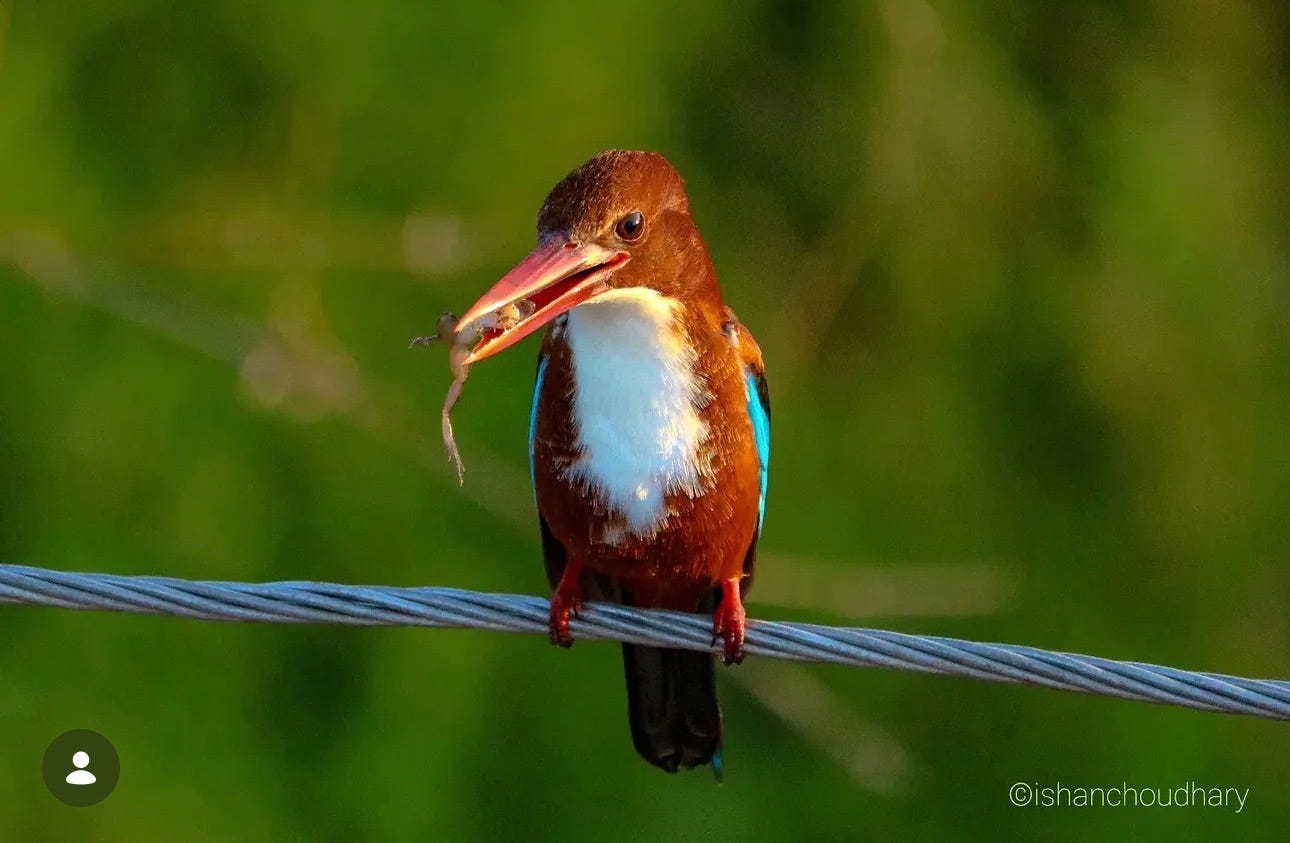
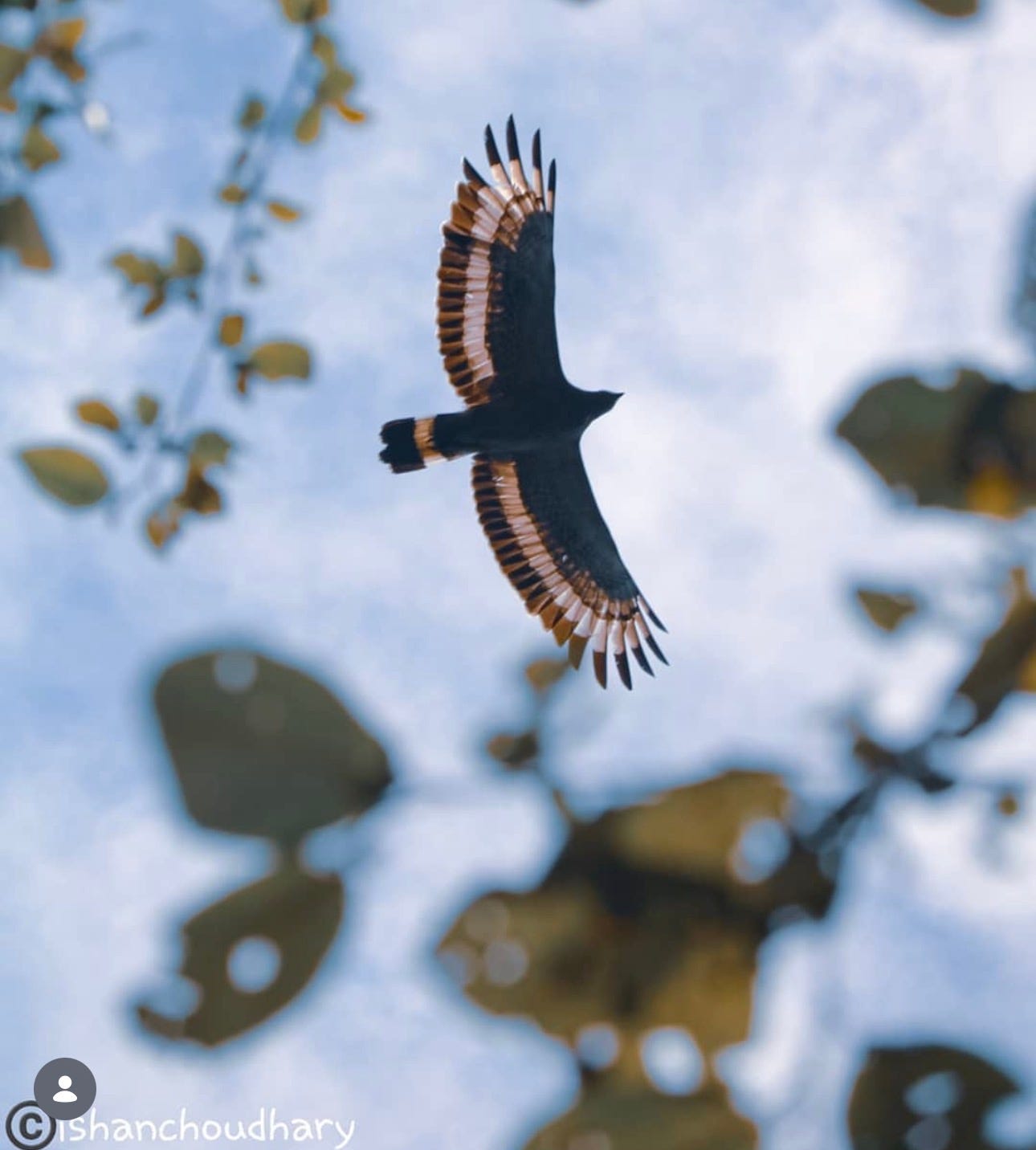
Predatory birds raise the bar even further. Eagles can spot prey from distances that leave our expensive binoculars looking slightly embarrassed. Their vision is estimated to be four to 8 times sharper than ours. Hawks can calculate speed, distance and movement with astonishing precision while diving towards prey at breathtaking velocity. Peregrine falcons regularly exceed speeds of 300 km/hr during hunting dives. At those speeds much lesser than that I become anxious when my uber driver merely changes lanes on the western express highway. They perform these aerial calculations without GPS, without collision warning systems and without someone announcing, “Recalculating route.”
Then there are migratory birds, perhaps nature’s finest navigators. Every year millions travel thousands of kilometres with astonishing accuracy, using the earth’s magnetic field, the position of the sun, the stars and visual landmarks. Scientists are still trying to fully understand how they do it. Meanwhile, I occasionally lose my phone despite possessing satellite navigation, digital maps and a photograph of where I left it.
The funny part is not that birds possess these extraordinary abilities. The funny part is our stubborn belief that intelligence only counts if it resembles human intelligence. We write symphonies. Birds navigate oceans. We invent aircraft. Birds have been flying efficiently for over a hundred million years. We design buildings. Weaver birds quietly continue producing elegant weather-resistant homes every breeding season without filing planning permissions or exceeding project budgets.
Humans have an impressive habit of making ourselves the measuring stick for everything. If an animal cannot perform tasks we value, we assume it lacks intelligence. We rarely ask whether it possesses abilities we cannot even begin to replicate. A pigeon cannot prepare an income tax return. Neither, if we’re being completely honest, can many of us without several YouTube tutorials and a mild emotional breakdown.
This tendency probably explains why phrases like “bird brain,” “bird-brained” and “bird-witted” entered the English language as insults. They reflected what people believed centuries ago, not what we know today. Language has a habit of preserving old prejudices long after evidence has moved on. We still call someone a dinosaur when we mean outdated, despite dinosaurs being among the most successful groups of animals ever to exist. We accuse people of having goldfish memories, even though research increasingly suggests goldfish remember far more than the mythical three seconds we confidently attribute to them. Animals have been victims of some truly dreadful public relations.
Perhaps the bigger joke is on us.
For all our remarkable achievements, we remain the only species that willingly spends hours arguing with strangers on the internet about topics we barely understand. We build sophisticated smartphones and then use them to forward messages claiming onions cure wifi problems or that eclipses affect mobile phone batteries. We congratulate ourselves on being the planet’s most intelligent species while repeatedly demonstrating that confidence and knowledge are not close relatives. I sometimes wonder what birds make of us. Imagine a crow watching morning traffic from an electric wire. Below him are hundreds of humans trapped in vehicles, leaning on their horns, shouting at complete strangers and somehow managing to arrive late despite inventing engines. The crow simply spreads his wings and leaves. He doesn’t need fuel. He doesn’t need traffic updates. He certainly doesn’t need to argue about whose fault the congestion is.
Maybe that crow occasionally looks down and mutters the avian equivalent of “human brain.”
If he does, I doubt the other crows disagree.